Welcome to the Ngorongoro Crater, often referred to as the "8th Wonder of the World" and a designated UNESCO World Heritage site. Formed over two million years ago when a massive volcano collapsed in on itself, this 600-meter-deep caldera creates a natural amphitheater spanning over 260 square kilometers.
At African Traces, we take you straight to the floor of this natural wildlife haven. Housing over 25,000 large mammals, including the rare black rhinoceros, dense lion prides, and tusked elephants, Ngorongoro offers one of the most concentrated and breathtaking game-viewing experiences anywhere on Earth.
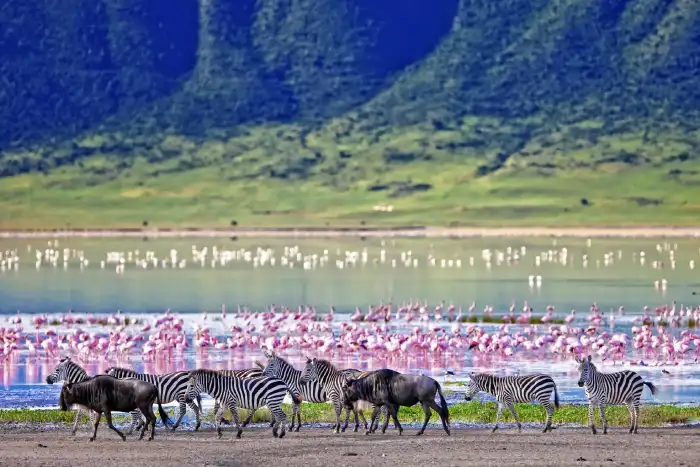
A shallow soda lake in the center of the crater floor. Famous for thousands of lesser and greater flamingos, hippos, and waterbirds.
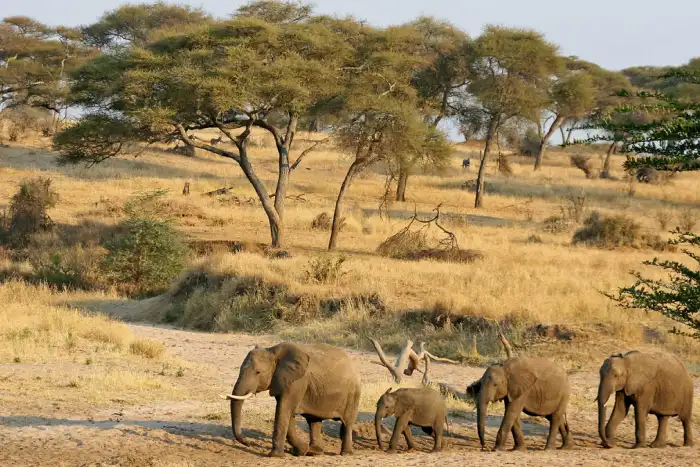
A lush fever-tree forest that serves as a prime habitat for elusive leopards, vervet monkeys, bushbucks, and giant bull elephants.
Vast plains covering most of the crater floor where wildebeests, zebras, gazelles, and hyenas roam alongside top-tier lion prides.
A freshwater swamp area populated by large hippo pods and a favorite scenic lunch stop during full-day game drives.
| Season | Months | What to Expect |
|---|---|---|
| Dry Season | June – October | Thinned vegetation makes spotting black rhinos and predators easier; warm days with cooler rim temperatures. |
| Short Rains | November – December | Lush green landscapes; arrival of migratory bird species; pleasant conditions with brief afternoon showers. |
| Calving & Green Season | January – March | Calving activity on nearby Ndutu plains; high concentrations of migratory herds around crater boundaries. |
| Long Rains | April – May | Fewer tourists inside the caldera; vibrant scenery; excellent option for photographers seeking quiet encounters. |
Descend 600 meters down the steep crater wall for an intensive 5-to-6-hour game drive with your private guide.
Explore the historic archaeological site known as the "Cradle of Mankind," home to crucial early hominid fossil discoveries.
Hike down the wooded slopes of nearby Empakaai Crater for panoramic views of its deep alkaline lake and volcanic surroundings.
Start From $ 850 Per Person.
Start From $ 1450 Per Person.
Start From $ 2100 Per Person.